The Oklahoma Mental Health Landscape
Oklahoma’s mental health data is harder to look at than most states’ data. Not because it’s hidden, but because the patterns are persistent across multiple measures in ways that suggest the system has been operating under strain for a long time.
The Oklahoma Department of Mental Health and Substance Abuse Services publishes regular reports on behavioral health needs across the state. The headline numbers, available in the agency’s annual reporting, show consistent themes: high prevalence of mental illness relative to national averages, low rates of treatment engagement, and a workforce shortage that has been described as critical by multiple federal and state agencies.
Several specific data points matter for families:
Suicide rate. Oklahoma consistently ranks among the top states in the country for age-adjusted suicide mortality. The CDC’s WISQARS database confirms this pattern across multiple years. The rural-urban gap within Oklahoma is significant: rural Oklahoma counties show suicide rates substantially higher than the Oklahoma City metro.
Provider shortage areas. The Health Resources and Services Administration (HRSA) tracks Health Professional Shortage Areas for mental health, and the map of Oklahoma is sobering. The substantial majority of Oklahoma’s counties are designated as mental health professional shortage areas, meaning the provider-to-population ratio is below federally defined thresholds for adequate access.
The Native American mental health dimension. Oklahoma has the largest per-capita Native American population of any state, and the mental health disparities experienced by Native American communities are significant. The Cherokee Nation, Choctaw Nation, Chickasaw Nation, and other tribal health systems provide important behavioral health services to their citizens, but the broader landscape of behavioral health care for Native families navigating crisis often involves coordination across tribal, state, and private systems that can be challenging to navigate.
The veteran population. Oklahoma has one of the highest per-capita veteran populations in the country. Veteran mental health, including the persistent post-deployment PTSD, depression, and substance use disorders that the VA system has been working to address, is woven into the broader Oklahoma mental health picture in ways that many states do not face at the same scale.
The combination of these patterns produces what clinicians sometimes describe as a “high-need, low-resource” environment. Need is concentrated; resources are dispersed; the gap between them is where families fall.
Why Rural Families Wait Longer to Get Help
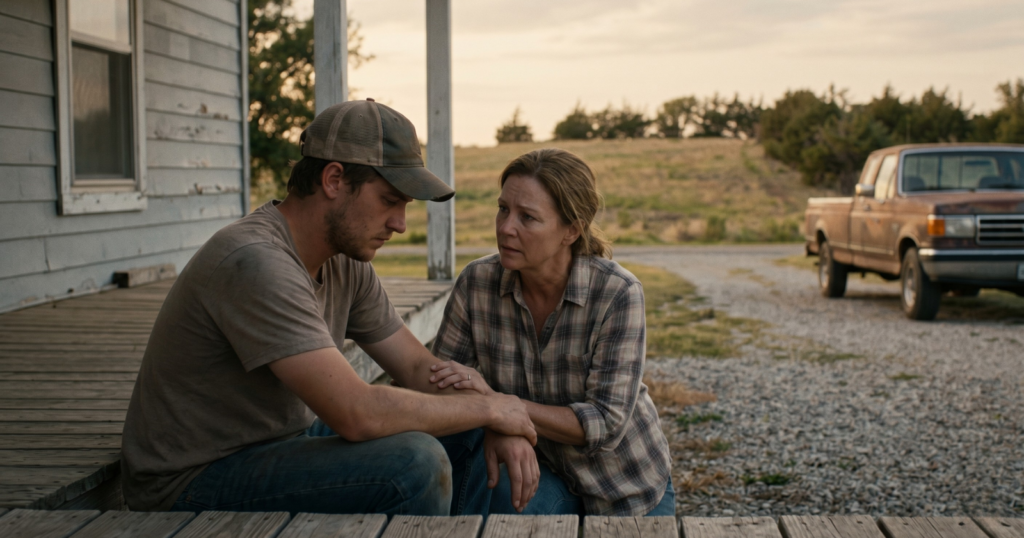
In ten years of working with families, I have noticed that rural Oklahoma families do not wait longer because they care less or because they are less informed. They wait longer because of a specific combination of cultural, practical, and visibility factors that compound each other.
The cultural factor: “we handle our own.”
There is a deep tradition in rural Oklahoma, and in many rural American communities, of solving family problems within the family. This is not a flaw. It reflects values of self-reliance, family loyalty, and a hard-earned skepticism of outside institutions that, historically, have not always served rural communities well. The American Indian boarding school history, the federal land allotment policies that broke up tribal land bases, and the general experience of being told what’s best by outsiders, have all shaped a cultural posture that takes pride in handling things internally.
This cultural strength becomes a vulnerability when the problem is psychiatric. Mental illness, particularly when it involves treatment refusal, often requires more than what a family can do alone. The cultural framework that says “we handle our own” was built for a different category of crisis than what families face when a loved one is depressed and isolating, or in a manic episode that won’t end, or refusing to take prescribed medication for psychosis.
The practical factor: distance and access.
Even when a family is ready to seek help, the practical reality of rural Oklahoma access creates barriers. A family in Beaver County who wants their loved one to see a psychiatrist may be looking at a two-hour drive each way. A family in Pushmataha County may be looking at three. Waiting lists for outpatient psychiatric appointments in the more accessible markets like Oklahoma City and Tulsa run months, not weeks. Insurance navigation, particularly for families on Medicaid or no insurance, adds additional friction. The federal SAMHSA Treatment Locator can show options, but for many rural Oklahoma families, “options” means “drive a long way and wait.”
The visibility factor: everyone knows.
In a small town, privacy is a different concept than in a city. When the family of someone in psychiatric crisis goes to seek help, the local doctor knows, the pharmacist knows, the church community knows, the school knows. The shame associated with mental illness, even in 2026, often keeps rural families silent because the cost of visibility is concrete and personal in a way that urban families don’t experience the same way.
The combined effect of these three factors is that rural Oklahoma families typically wait until the crisis is acute before reaching outside the family for help. By the time they call, the situation has often been deteriorating for months or years.
What "Mental Health Intervention" Actually Means
Most Oklahoma families have never heard the term “mental health intervention.” The cultural association of “intervention” with addiction, reinforced by years of television exposure to the genre, is so strong that the idea of a structured family process for a non-substance crisis is unfamiliar.
A mental health intervention is a structured, clinician-led process designed to help a family member in psychiatric crisis accept treatment they have been refusing. It is not the same as any of the other things families think of when they think about getting help:
It is not involuntary commitment. Involuntary commitment is a legal process, initiated through law enforcement or designated mental health professionals, used in cases where a person meets specific legal criteria for imminent danger. Mental health intervention is voluntary on the part of the person at the center; the goal is to help them accept care, not force them into care.
It is not a crisis hotline. Crisis hotlines like the 988 Suicide and Crisis Lifeline provide immediate emotional support and connection to local resources for acute crisis. They are essential and they save lives. They are not designed for the situation where a person needs ongoing treatment, won’t accept it, and the family is trying to bridge that gap over time.
It is not therapy or psychiatric treatment itself. Therapy and psychiatry assume the person will engage. Mental health intervention is specifically for the case where the person is refusing to engage.
It is not a confrontation. The popular image of intervention as a confrontational family meeting, complete with prepared statements and ultimatums, is largely outdated in serious clinical practice. The contemporary model is non-confrontational, trauma-informed, and built around reducing the shame response that drives refusal in the first place.
For families with a loved one in psychiatric crisis who is refusing treatment, professional mental health intervention services are the appropriate clinical response. The service exists for the exact gap that rural Oklahoma families are most likely to fall into.
Common Oklahoma Family Scenarios
The cases we see in Oklahoma fall into recognizable patterns. Naming them sometimes helps families recognize their own situation in language that has been hard to find:
The adult child with worsening depression who won’t leave the house. Twenties, thirties, sometimes forties. Lives with parents or in a small apartment in town. Stopped going to work or college months ago. Won’t engage with friends. Spends most of the day in bed or on a phone. Says they’re “fine” or “just tired” when asked. The family is watching them shrink and doesn’t know how to interrupt the trajectory. Mental health intervention is appropriate when the depression has reached a point where it is preventing function and the person has stopped considering treatment options.
The parent with untreated bipolar disorder cycling through episodes. The family has watched this pattern for years. Periods of stability, then escalating mania (irritability, sleep loss, impulsive spending, sometimes risky behavior), then crash into depression, then slowly back to baseline. Past medication trials have not been sustained because during stable periods, the person stops the medication. The family has tried everything they can think of. Mental health intervention is appropriate when the cycling has become destructive enough that the family needs an outside structure to change the pattern.
The veteran with PTSD whose family has been “managing” for years. Often a spouse, often parents, often adult children who have learned what triggers him and what doesn’t. The veteran has not engaged with VA mental health services, or has tried them and disengaged. The family has built their household around managing his condition. The toll on the family system, even when the veteran himself is “functional,” is significant. Mental health intervention is appropriate when the family is ready to address the underlying condition rather than continuing to manage it indefinitely.
The spouse with severe anxiety who refuses to see a provider. The anxiety has become a defining feature of the household. The spouse is unable to drive at night, unable to leave the house alone, increasingly isolated. They acknowledge the anxiety but refuse to consider therapy or medication. The other spouse and any children are adjusting their lives around the constraints. Mental health intervention is appropriate when the anxiety has reached a level where it is meaningfully limiting the affected person’s life and the family’s, and the person remains unwilling to seek care.
The teenager whose family is genuinely worried about safety. This category requires more careful framing. For minor children, mental health intervention as a service is typically not directly applicable in the same way as for adults, because parents retain legal authority over minor children’s medical care. But the family dynamics around a teen who is refusing to engage with mental health care, particularly in cases involving self-harm or expressed suicidal ideation, often benefit from clinical guidance. In these cases we work with the parents on family-system strategies and coordination with appropriate care providers, including pediatric psychiatry referrals. If you are in this situation in Oklahoma, the most important first step is connecting with a child and adolescent psychiatrist or contacting 988 if there is any concern about safety.
How Nationwide Intervention Services Reach Rural Oklahoma
One of the most common assumptions rural Oklahoma families bring to the question of mental health intervention is that they need a local provider. The reasoning is intuitive: the loved one is here, the family is here, surely the help has to come from somewhere nearby.
This is rarely how the service actually works.
Mental health interventionists, particularly those operating at the clinical credential level appropriate for the cases described above, are not distributed evenly across the country. There are not interventionists with comparable credentials in every Oklahoma town, or even every Oklahoma county. The model that fits rural Oklahoma is not “find the local interventionist.” It is “engage a nationwide service that travels to your family.”
The Crosswell model works specifically because it does not assume the family is in a metropolitan area. The Listening phase happens through scheduled remote sessions, conducted with the family across whatever geography they are spread across. Pre-intervention planning happens remotely. The in-person component, the family meeting itself, involves travel to the family’s home or to a nearby location appropriate for the case. Treatment placement, sober transport (when substance use is co-occurring), and ongoing family support all extend the model into the family’s actual life.
For Oklahoma cases specifically, this often means working with a mental health interventionist serving Oklahoma families on cases where the family is in Lawton, McAlester, Enid, Ardmore, Durant, Bartlesville, Ponca City, Stillwater, or rural communities that don’t show up on most provider locators at all. The geographic scope is part of why nationwide intervention coverage including rural areas matters.
Treatment placement after a successful intervention often involves out-of-state facilities. This is not because Oklahoma lacks treatment options; it is because the specific clinical needs of higher-acuity psychiatric cases, particularly those involving co-occurring conditions, eating disorders, complex trauma, or severe psychosis, sometimes match better with specialized programs in Arizona, Texas, Tennessee, or other states. The placement decision is case-specific and is part of the Planning phase.
Sober transport from Oklahoma to treatment, whether in-state or out-of-state, is part of the integrated workflow. The transition from “yes” to “in the program” is clinically delicate, and rural distance does not change that delicacy; it intensifies it.
When to Call vs. When to Wait
Families ask for this section by name. The honest framework:
Call this week if any of these are present:
- Active suicidal statements or recent suicidal behavior (also call 988 immediately)
- Recent self-harm
- Severe weight loss or refusal to eat (possible eating disorder)
- Escalating manic or psychotic symptoms
- Loss of contact with reality (delusions, hallucinations, severe paranoia)
- Recent decline in functioning (stopped working, stopped leaving the house, stopped basic self-care)
- Past psychiatric hospitalizations that the person is now refusing to revisit
- A family member is showing acute stress symptoms because of the caregiving burden
Begin planning, not in a panic but seriously, if:
- A diagnosed condition has been off medication for an extended period
- Family conversations about treatment have produced refusal, denial, or anger
- The person’s functioning has been slowly declining over months
- Past attempts at help have not held
- You are no longer confident the person is being honest about how they’re doing
- The family is rearranging their lives around managing the situation
Call 911 or 988, not an interventionist, if:
- The person is in active suicidal crisis with intent and means
- The person is making credible threats to others
- The person is in acute psychotic crisis and unable to maintain safety
- The person has taken substances or medications that may require medical intervention
There is also a category that families don’t often name out loud: the long, gradual deterioration that has been going on for years and doesn’t feel like a “crisis” until you step back and look at the trajectory. This is, in many ways, the most common pattern in rural Oklahoma mental health cases. It is not less urgent for being slow. The cost of waiting in psychiatric crisis is measured in years of lost life as much as in acute danger.
Frequently Asked Questions
Is there a mental health interventionist available in smaller Oklahoma cities like Lawton, Enid, or McAlester?
We work with families across Oklahoma, including in smaller cities and rural communities. The model is designed for cases where the family is not in a major metropolitan area. The pre-intervention work happens remotely, and the in-person component involves travel to the family.
Can you work with us if we live an hour or more from Oklahoma City or Tulsa?
Yes. The majority of the Oklahoma cases we work involve families outside the immediate metro areas. Distance is not a barrier.
What if our loved one is a veteran with VA benefits?
We have worked with veteran families and understand that veterans often have VA-based mental health benefits available. The intervention process is independent of how care is funded afterward. We do not give specific advice on VA benefits navigation; that is appropriately handled through VA channels and through the veteran’s own care team. What we do is help the family bridge the gap between “this veteran needs care” and “this veteran is engaged in care,” whatever the funding source ends up being.
Will treatment be in Oklahoma or somewhere else?
This depends on the case. Some cases place well into Oklahoma-based programs. Others place better into out-of-state programs that have specialized care for the specific clinical picture. The placement decision is part of the Planning phase, and we work through it with the family before the intervention happens.
What if our family member doesn’t have insurance?
This is a real consideration for many Oklahoma families, particularly in counties with high uninsured rates. We are honest about it: intervention services are typically a private-pay engagement, and treatment placement after intervention varies significantly in coverage. For families without insurance, we discuss the financial picture transparently in the initial consultation, and we can sometimes coordinate with sliding-scale or grant-based programs depending on the case. The Oklahoma Department of Mental Health and Substance Abuse Services maintains information on state-funded behavioral health services that may be appropriate for some families.
How do we handle this without everyone in town knowing?
This is one of the most asked questions, and the answer is that we structure cases with privacy as a primary consideration. The intervention does not need to be staged at the family’s church or town hall. It happens in a private setting, often a family member’s home, sometimes in a neighboring community. The clinician is not a local known figure. We are aware of the social geography of small-town Oklahoma and we work within it.
Conclusion
The mental health gap in rural Oklahoma is real, and it has real consequences for families. The structural factors that produced it are not changing quickly. State agencies, tribal health systems, the VA, and dedicated rural mental health workers are doing important work, but the gap is large enough that families with a loved one in active psychiatric refusal often find themselves out of options before they find their way to the right help.
A mental health intervention is one of the options most rural families have never heard of. It is not the right answer for every case. It is the right answer for the specific case of a loved one who needs psychiatric care, is refusing it, and where the family is watching the situation deteriorate without a clear path forward.
If you are in that situation in Oklahoma, the most useful first step is a confidential conversation with a clinician who understands both the work and the specific reality of mental health care access in this state. The conversation does not commit you to anything beyond itself. It gives you a clinical perspective on what you are observing and on what next steps make sense.
About the Author
Will Crosswell is a Licensed Clinical Social Worker (LCSW), Licensed Chemical Dependency Counselor (LCDC), Love First Certified Clinical Interventionist, and EMDR-trained clinician with more than ten years of experience helping families navigate addiction and mental health crises. Crosswell Interventions is a nationwide intervention practice that works with families across Oklahoma and across the country. Crosswell Interventions is independent and does not accept referral fees from treatment facilities.