Where the "Wait Until They're Ready" Idea Came From
Most families, when they articulate why they are waiting, use some version of a phrase: “they have to want it.” Or: “they have to be ready.” Or: “we can’t help them if they don’t want help.”
This framing did not come out of nowhere. It has a specific history, and understanding the history helps explain why the framing has both wisdom and limits.
The “they have to want it” framing entered American addiction culture primarily through the rise of Alcoholics Anonymous and the broader 12-step movement in the twentieth century. The AA framework introduced the concept of “powerlessness” as a starting point for recovery: the addicted person must acknowledge that their use is out of their own control, and from that acknowledgment, recovery becomes possible. Al-Anon, the companion program for family members, extended this framework to families: you are also powerless over your loved one’s drinking, and you must accept that powerlessness as a foundation for your own well-being.
This framework has helped millions of people. It is genuinely wise within its scope. The acceptance it teaches is real wisdom.
But over the decades, the framework was sometimes flattened in family-facing language into something it did not originally mean. “You are powerless over your loved one’s drinking” was meant as a statement about control, not timing. It meant: you cannot make them stop. It did not mean: you must wait passively until they decide to seek help on their own.
The clinical evolution since AA’s founding has been substantial. The research on family involvement in pre-treatment engagement, particularly the work on Community Reinforcement and Family Training (CRAFT), shows that structured family engagement with the person who is still using significantly improves the rate at which that person eventually enters treatment, compared to the passive “wait until they’re ready” approach.
In other words: families who actively work to engage their loved one in treatment, using the right clinical methods, get better outcomes than families who wait. This is the opposite of what the old framing suggests.
So where does the “they have to want it” framing still serve families? In the part about not being able to force change at the deepest level. Recovery, ultimately, does involve the person’s own agency and willingness. You cannot do their recovery for them. That part of the framing remains true.
Where does the framing not serve families? In the part about timing. There is no clinical evidence that waiting passively produces better outcomes than thoughtful, structured family engagement. The evidence points the other way. The “wait until they hit rock bottom” framing, in particular, has been substantially abandoned in serious clinical practice because the rock bottom in the fentanyl era is too often death.
The Six Costs of Waiting
Here is what waiting actually costs. The framing matters because most family decision-making focuses on the immediate question (are we ready, are they ready, can we get the family to agree) and not on the underlying clinical reality of what continues to happen during the wait.
1. The medical cost.
In the fentanyl era, the medical cost of waiting is not theoretical. The CDC’s overdose mortality data documents the dramatic increase in opioid-related deaths over the past decade, with fentanyl driving the majority. For families with a loved one using opioids, methamphetamine, cocaine, or counterfeit pills, the underlying medical risk of continued use has increased substantially. The “they’re being careful” reassurance that families sometimes give themselves is harder to sustain when the supply itself is increasingly contaminated. Alcohol carries its own medical risks, particularly in long-term heavy use: liver disease, cardiomyopathy, pancreatitis, alcohol-related dementia, and the medical consequences of severe withdrawal. Mental health crises carry their own medical risks, including suicide, accident, and the deterioration of physical health that accompanies untreated psychiatric illness.
2. The brain cost.
The clinical literature on what extended substance use does to the brain is substantial, and it matters for recovery. The National Institute on Drug Abuse summarizes the neuroscience of addiction, showing that chronic use produces changes in brain structure and function that affect decision-making, impulse control, emotional regulation, and the capacity to engage with treatment itself. Recovery is harder, slower, and less complete the longer use continues. This is not a moralistic claim about willpower; it is a description of what extended use does to the organ that has to do the work of recovery. For mental health conditions, similarly, longer periods of untreated illness are associated with worse long-term outcomes; the literature on duration of untreated psychosis is particularly clear on this point.
3. The family cost.
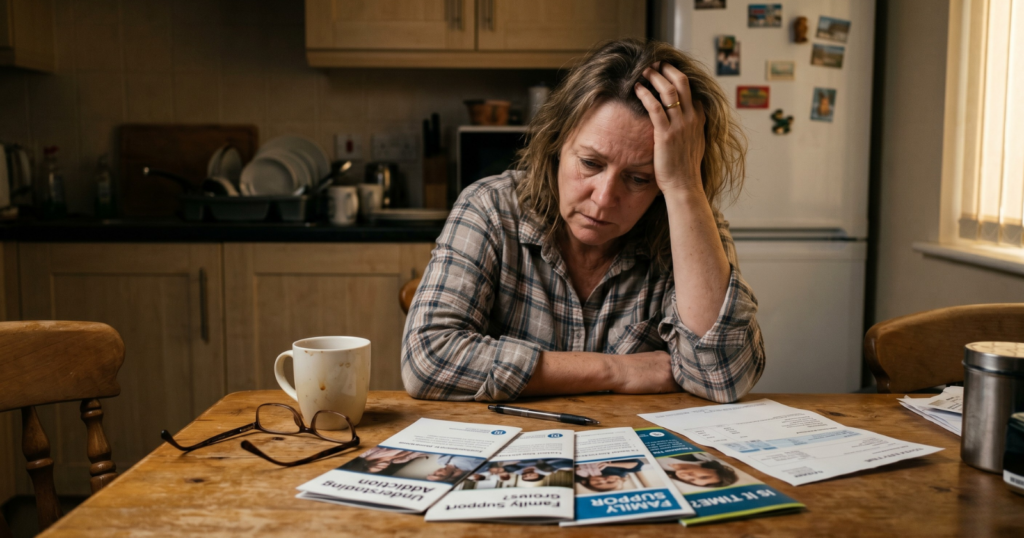
The family members of someone in active addiction or untreated mental illness accumulate trauma symptoms during the wait. The children grow up in households organized around the crisis. The partner spends years in a state of chronic stress. The parents age into their seventies and eighties while still managing an adult child’s crisis. The siblings build their lives partly around the question of when the next call will come. This is not melodrama. This is documented clinical pattern. The trauma research on family members of people with addiction and mental illness, sometimes called secondary trauma or vicarious trauma in the clinical literature, describes a real and treatable condition that millions of family members carry.
4. The legal cost.
Active addiction frequently produces legal consequences that compound the difficulty of later recovery. DUIs that affect driving and employment. Possession charges that show up on background checks. Custody decisions that shape access to children for years. Bankruptcies. Lost professional licenses. These are not punishments for waiting. They are the consequences that pile up during the years of continued use, and each one makes the eventual recovery harder to build a life from. For families coordinating intervention work across major markets like California, New York, or Pennsylvania, we increasingly see cases where legal proceedings have moved faster than the family’s decision to seek help, and the loved one is now navigating both the recovery itself and the legal consequences simultaneously. Intervention services in Pittsburgh and across Pennsylvania, for example, often involve cases where legal pressure has already begun.
5. The financial cost.
The direct financial cost of active addiction or untreated mental illness is significant: the substance itself, the medical costs of acute episodes, the legal costs, the lost wages. The indirect cost is larger: lost earning capacity over years, the depletion of family savings, the impact on housing stability, the impact on the family members’ own careers as they manage the crisis. By the time many families come to intervention, they have already spent more on managing the situation than the intervention and treatment would have cost if engaged earlier.
6. The relational cost.
Some relationships do not survive years of active addiction or untreated mental illness. Marriages end. Adult children become estranged from parents. Siblings stop speaking. Friendships erode past the point of repair. This is, for many families, the heaviest cost. The person who eventually enters recovery often finds that the relationships they want to rebuild have changed shape in their absence, sometimes irrevocably. Waiting does not preserve relationships; it usually erodes them.
What the Research Actually Says
For families who want to look at the evidence directly, the research base is clearer than the popular conversation suggests.
On family involvement. The CRAFT model, developed by Robert Meyers and Jane Smith, has been studied extensively over the past several decades. The outcomes consistently show that family members trained in CRAFT principles produce treatment entry rates substantially higher than the passive “wait until they’re ready” approach. Hazelden Betty Ford Foundation’s research summaries document these outcomes. The clinical implication is that active family engagement, done with the right methods, works.
On the “rock bottom” myth. The idea that people must hit rock bottom before they can recover has been substantially abandoned in serious clinical practice. The clinical reality is that there is no single “bottom” that reliably produces willingness, and that rock bottom in the fentanyl era is too often death rather than a teachable moment. The literature on pre-treatment engagement, including the NIDA’s Principles of Effective Treatment, explicitly notes that treatment does not need to be voluntary to be effective, and that family or social pressure can significantly increase treatment entry and outcomes.
On family trauma. The research on what family members of people with addiction and mental illness experience over time is substantial. The patterns of chronic stress, hypervigilance, sleep disruption, identity erosion, and compassion fatigue are well-documented. The work on adverse childhood experiences (ACEs) traces some of these patterns into the next generation: children raised in households with active parental addiction or untreated mental illness carry elevated risk for a wide range of adult health and mental health concerns. The CDC’s research on adverse childhood experiences provides the foundational summary of this work.
The Trauma Loop Families Get Stuck In
For the family members reading this, this section may be the most important.
The experience of loving someone in active addiction or untreated mental illness, over a long period, is itself a trauma. This is not metaphorical. The clinical literature uses the term secondary trauma or vicarious trauma to describe what happens to people who repeatedly witness another person’s suffering without being able to stop it. The symptoms are similar to direct trauma: hypervigilance, sleep disruption, intrusive thoughts, emotional numbing, irritability, difficulty concentrating, and the gradual erosion of the person’s own sense of self.
The specific patterns family members commonly experience:
The hypervigilance pattern. You are always listening for the phone to ring. You check on them in the night. You notice every change in their face. Your body is in a state of low-grade alert for years.
The hope-and-despair cycling. There are good days. There are months that feel like progress. Then there is a relapse, or an episode, and the hope you let yourself feel becomes evidence of your own foolishness. You learn not to hope. Then something good happens and you hope again, and then you crash again. The cycling itself becomes a trauma.
The walking-on-eggshells pattern. Every conversation is calibrated for what might trigger them. You stop saying things you used to say. You stop bringing up subjects you used to bring up. Your relationship with them shrinks to fit the shape of what is safe to discuss.
The compassion fatigue pattern. Eventually, the family member’s capacity to feel concern, sadness, or worry diminishes. Not because they have stopped caring, but because the system has been running too long on too few resources. They describe feeling numb, hollow, “done.” This is not callousness. It is a documented protective response.
The identity erosion pattern. “I don’t remember who I was before this.” Family members of people with long-term addiction or mental illness often describe the experience of having lost themselves to the management of someone else’s crisis. The hobbies are gone. The friendships are gone. The professional identity is diminished. The person who used to be has been replaced by the person who manages a crisis.
These patterns are not melodramatic. They are documented clinical reality. They are also, importantly, treatable. The family work that good intervention practice includes is partly about beginning to address what the family has accumulated during the wait.
How "Intervention" Is Different Than Most Families Imagine
One of the reasons families wait is because the word “intervention” carries an association built almost entirely from a television show that aired for fourteen seasons and embedded a particular image in American culture: a confrontational meeting where family members read prepared statements, present ultimatums, and the person at the center either accepts treatment in tears or refuses and storms out.
That model exists. It is also substantially outdated, both clinically and in practice. The contemporary model used by most clinically rigorous interventionists, including the Love First model that informs our work and the broader trauma-informed approaches that have emerged over the past two decades, looks meaningfully different.
A contemporary intervention is closer to a structured family conversation than to an ambush. The pre-intervention work, weeks of family sessions, takes longer than the family meeting itself. The family meeting is paced, framed around concern rather than accusation, and designed to reduce the shame response that triggers refusal. Treatment placement is confirmed in advance. The person who is the focus of the conversation is invited into it, not surprised by it in the punitive sense.
The Crosswell Method’s five phases (Listening, Invitation, Planning, Treatment Transition, Ongoing Family Support) reflect this contemporary approach. The work spans weeks or months. The family meeting is one event within a longer process. For families across the country, including those working with a professional interventionist in California, the New York metro area, the Southeast, and the Midwest, the model adapts to the specific geography and family configuration while keeping the same clinical foundation.
The reason this matters for the timing decision is that the picture in your head when you think “intervention” may not match what an intervention actually looks like in clinically rigorous practice. The fear of an explosive confrontation may be one of the things keeping you from acting. The actual work is slower, more careful, and more sustainable than the TV image.
The Specific Signs It's Time Now, Not Later
For families wanting concrete decision support, the following list is the clinical framework I use. These signs do not mean you have failed. They mean the situation has moved into a window where waiting carries more risk than acting.
Act this week if any of these are present:
- A recent overdose, even one the person minimizes (“it was barely an overdose,” “it was just the wrong batch”)
- A recent suicidal statement or actual self-harm event
- Escalation of substance use frequency, dose, or method in the last 60 days
- Loss of a major functional anchor (job, primary relationship, housing) in the last 90 days
- Recent legal events related to use
- Children in the household whose safety, stability, or development is being affected
- The family member doing primary caretaking is showing physical deterioration (sleep loss, weight changes, frequent illness, blood pressure changes, exhaustion)
- A past attempt at help has recently failed and the situation is escalating again
- A psychiatric diagnosis has been off medication for an extended period and decompensation is visible
- The person has begun to talk about death, escape, or “ending things” in ways that go beyond the usual
Begin serious planning if:
- You are watching a slow, sustained deterioration over months without an acute event
- Past attempts at conversation have produced denial, anger, or withdrawal
- The social circle has shifted entirely toward people who reinforce the use or condition
- Family stress symptoms are appearing (the family system showing signs of strain)
- The person’s own statements about themselves no longer match what you observe
- You can no longer remember the last time the situation got meaningfully better
Call 911 or 988, not an interventionist, if:
- The person is currently in acute danger to themselves or others
- The person has just used and is showing signs of overdose
- The person is in acute psychiatric crisis with active suicidal or homicidal ideation and means
When You Should Wait
To be balanced and honest: there are situations where waiting briefly serves better than acting immediately. The list is shorter than the list above, but it is real.
Wait if:
- The person is currently engaged in treatment and is showing meaningful engagement. Disrupting active treatment with an intervention is counterproductive.
- The person has recently left treatment (the first 90 days post-discharge is a vulnerable but distinct window). Unless crisis is re-emerging, support during this window typically looks like coaching and family support, not intervention.
- The condition is currently stable on appropriate medication and the family is in a maintenance phase. Maintenance phases benefit from continued support, not from intervention.
- The acute crisis is being addressed by emergency services (in which case 911 or 988 is the appropriate path, not intervention work).
There is no clinical case for indefinite waiting. The category of “wait until they’re ready” without any boundary is not a clinical category. It is a cultural script that has, in many cases, served as cover for paralysis.
Frequently Asked Questions
We’ve tried before and it didn’t work. Should we try again?
Yes, in most cases. A failed previous attempt is not a reason to stop trying; it is information about what didn’t work. Many of the cases we work involve families who have made one or two prior attempts that did not produce sustained change. A professional intervention designed with the prior history in mind is meaningfully different from another family attempt at the same approach.
They said they’d hurt themselves if we ever did an intervention.
This is a real fear families have, and it deserves a real answer. Statements like this are typically attempts to maintain the existing system by raising the perceived cost of changing it. The clinical evidence does not support the idea that a well-conducted intervention increases suicide risk; the evidence points the other direction, that the situation prior to intervention, with the person untreated and the family helpless, is the higher-risk state. That said, cases involving suicidal statements require especially careful clinical handling, and a trained clinician is essential. This is not work to attempt alone.
They’re an adult living independently. Can we still intervene?
Yes. The majority of cases we work involve adult loved ones, often living independently and sometimes in different states from the family. Adult status changes some logistics (we cannot share clinical information with the family without consent, for example), but it does not change whether intervention is possible or appropriate. The family’s love and concern remain the basis for the work regardless of where the loved one lives or what their legal status is.
Won’t intervention damage the relationship?
A well-conducted intervention is designed specifically to preserve relationship while changing what the relationship subsidizes. The confrontational ambush model does sometimes damage relationships. The contemporary, trauma-informed, non-confrontational model is built around the principle that love and structure can coexist, and that the family’s continued enabling of the situation is itself damaging the relationship more than a structured conversation would. The clinical evidence supports this framing.
What if they have mental health issues, not just substance use?
This is increasingly common. A substantial majority of substance use disorder cases involve co-occurring mental health conditions. In some cases, the primary intervention focus is mental health rather than substance use. A professional mental health intervention addresses the psychiatric refusal pattern specifically, and integrates substance use considerations when they are present.
How long does it take to plan an intervention?
The full process typically spans several weeks. The family conversation itself is usually a single half-day or full day. The Listening phase and Planning phase, which happen before the family meeting, take the most time. The Ongoing Family Support phase continues for months after the intervention.
Conclusion
This is the longest piece on the Crosswell site because the topic warrants the depth. The decision about when to do an intervention is one of the most consequential decisions a family makes, and most of the public conversation about it is shaped by frameworks that no longer reflect the clinical evidence or the current risk environment.
The honest summary: the bias in family decision-making is toward waiting too long, not acting too soon. The reasons for the bias are understandable. The cost of the bias is real and is paid in years of family life, in medical risk that has increased substantially in the fentanyl era, and in the slow accumulation of trauma symptoms across an entire family system.
If you are wrestling with the timing decision, the most useful next step is a confidential conversation with a clinician who can give you a clear-eyed assessment of your specific situation. The conversation does not commit you to anything. It gives you a clinical perspective on what you are observing and what the timing actually looks like in your case.
We wrote this piece because the silence about what waiting costs is itself a clinical problem. Families deserve the honest picture, even when, especially when, the picture is harder to look at than the cultural script.
About the Author
Will Crosswell is a Licensed Clinical Social Worker (LCSW), Licensed Chemical Dependency Counselor (LCDC), Love First Certified Clinical Interventionist, and EMDR-trained clinician with more than ten years of experience helping families navigate addiction and mental health crises. Crosswell Interventions is a nationwide intervention practice that works with families across Oklahoma and across the country. Crosswell Interventions is independent and does not accept referral fees from treatment facilities.