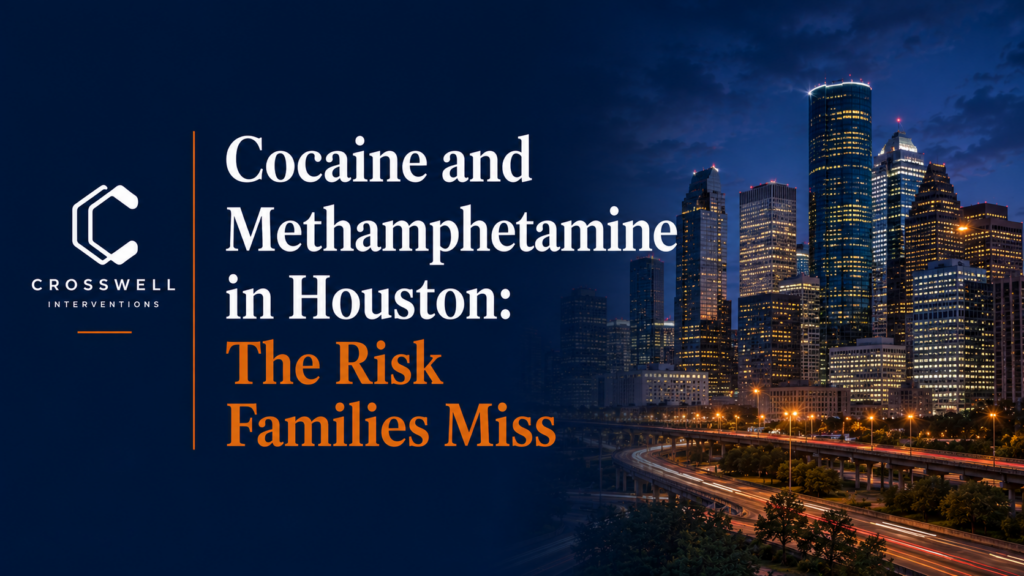
When people talk about the overdose crisis in Houston, they usually mean fentanyl. It is the leading cause of drug deaths in Harris County, and it deserves the attention. But it is not the whole story. After fentanyl, the most common drugs in local overdose deaths are stimulants, cocaine and methamphetamine, and Houston has a long history with both. Families who are watching only for opioids can miss what is actually happening, and in a supply where stimulants are frequently contaminated with fentanyl, that blind spot can be dangerous.
Houston's long relationship with stimulants
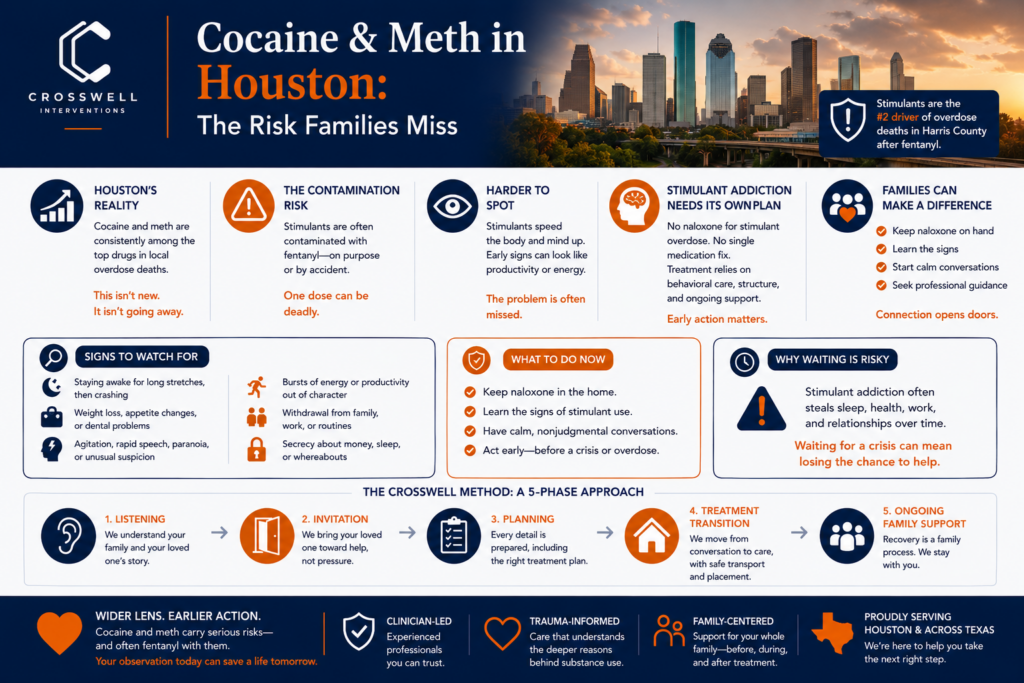
Harris County’s overdose picture has always been more than opioids. For years, cocaine and methamphetamine have been among the most common substances found in local drug deaths, and stimulant-involved deaths have risen over time. This is not new to Houston, and it is not fading with the recent improvements in fentanyl numbers. After fentanyl, cocaine and meth round out the top of the list.
That history matters because it shapes what risk looks like here. A family that pictures addiction as sedation and nodding off, the classic image of opioids, may not recognize a stimulant problem at all. Cocaine and meth do the opposite. They speed the body and mind up, and the signs look nothing like what most people expect. It is also worth noting that the two stimulants often show up in different contexts and communities, and a person may use one or both over time, sometimes alongside alcohol. If drinking is part of the picture, that raises its own risks, and our Houston team has written more about alcohol and recovery support in Houston for families facing that side of the problem.
The contamination problem
Here is the danger that has changed everything. Stimulants in Houston, as across the country, are increasingly contaminated with fentanyl. Sometimes this is deliberate, and sometimes it is cross-contamination in a supply chain that handles multiple drugs. Either way, the result is the same: a person who uses cocaine or meth, and who has never thought of themselves as at risk of an opioid overdose, can die from one.
This is the single most important thing for Houston families to understand. The old mental categories, thinking of someone as “just a cocaine user” and therefore safe from the fentanyl crisis, no longer hold. In a contaminated supply, there is no such thing as a stimulant that is guaranteed to be free of opioids. It is why naloxone belongs in the home even when a family is certain that opioids are not part of the picture. It also changes how a family should weigh risk. A person who uses cocaine only occasionally, at parties or on weekends, may feel to everyone involved like a lower-stakes situation than daily opioid use. In a contaminated supply, that occasional use can be just as lethal, because a single tainted dose is all it takes.
Why stimulant addiction is harder to spot
Opioid use tends to slow a person down. Stimulant use tends to speed them up, and the early signs can look like things a family might even welcome: more energy, more productivity, staying up late to get things done, losing weight. That is part of why stimulant problems often go unrecognized until they are well advanced. A family may spend months attributing the changes to stress, a demanding job, or a rough patch before the pattern becomes undeniable.
As use continues, the harder signs emerge: long stretches without sleep followed by crashes, agitation, rapid or pressured speech, paranoia or unusual suspicion, weight loss, dental problems, and repetitive, driven behaviors. Cocaine and meth differ in their specifics, but both carry serious risks on their own, including strain on the heart and cardiovascular system, alongside the ever-present risk of fentanyl contamination.
Signs families should recognize
These signs, especially in combination and over time, are worth taking seriously:
- Staying awake for long stretches, then crashing for extended periods
- Marked weight loss, appetite changes, or dental problems
- Agitation, rapid speech, paranoia, or unusual suspiciousness
- Bursts of energy or productivity that seem out of character
- Withdrawal from family, work, or routines
- New secrecy about money, sleep, or whereabouts
No single item proves anything, and several have ordinary explanations. But a persistent cluster is worth trusting, even when the person insists nothing is wrong.
Why stimulant addiction needs its own approach
There is no naloxone equivalent for a stimulant overdose, and no single approved medication that treats stimulant use disorder the way certain medications support opioid recovery. Treatment relies more heavily on behavioral approaches, structure, and sustained support. That is not cause for discouragement, because people recover from stimulant use disorder regularly. It does mean the plan looks different from an opioid plan, and that a knowledgeable, individualized approach matters. A program built around opioid recovery will not automatically fit someone whose primary substance is cocaine or meth. Our overviews of cocaine intervention in Texas and meth intervention in Texas outline how those plans differ.
What Houston families can do right now
Keep naloxone in the home even if you believe only stimulants are involved, because contamination with fentanyl is common and naloxone can still save a life. Learn the specific signs of stimulant use, which differ from the opioid signs most people picture. Then, when you are ready, start a calm conversation rather than a confrontation.
If you expect resistance, our guide on how to talk to someone who refuses help can help you prepare, and our overview of the signs it may be time for an intervention can help you judge timing. For the broader local overdose picture, our piece on what the Harris County fentanyl numbers tell families provides context, and because substance use and mental health are often tangled together, our look at rising mental health challenges and interventions in Houston may help as well. If you would rather think it through with someone before you say anything at all, a Houston interventionist can help you weigh timing and approach.
How a professional intervention works
A professional intervention is planned, supported, and compassionate, not an ambush. At Crosswell Interventions we use a five-phase approach, the Crosswell Method, built around connection rather than pressure:
- Listening. We start by understanding the family system and the person’s story before any plan is made.
- Invitation. We bring the person toward help rather than cornering them.
- Planning. Every practical and clinical detail is prepared in advance, including a treatment plan suited to stimulant use.
- Treatment transition. We move from the conversation to actual care, including safe transport and placement.
- Ongoing family support. Recovery is a family process, not a single day.
How Crosswell Interventions helps Houston families
We provide clinician-led intervention support for families across Texas, and our drug and alcohol interventionist services in Houston, TX cover the full arc, from the first worried phone call through treatment placement and family coaching. For the broader statewide picture, our overview of drug and alcohol interventions in Texas explains how the process works. Our work is trauma-informed and family-centered, and we tailor the approach to the substance involved, including the specific realities of cocaine and methamphetamine use.
Frequently Asked Questions
Is cocaine in Houston laced with fentanyl? It can be. Stimulants, including cocaine and meth, are increasingly contaminated with fentanyl, sometimes deliberately and sometimes through a shared supply chain. Someone who uses only cocaine can still be exposed to fentanyl and at risk of an opioid overdose, which is why the old assumption that a stimulant user is safe from the fentanyl crisis no longer holds.
Can you overdose on meth or cocaine? Yes. Both stimulants carry serious risks on their own, including effects on the heart and cardiovascular system, and a stimulant overdose is possible without any opioid involved. Contamination with fentanyl adds a separate opioid-overdose risk on top of that.
How do you help someone who uses cocaine but denies a problem? Denial is common, and confrontation usually deepens it. Lead with concern rather than accusation, focus on specific changes you have noticed rather than labels, and consider professional guidance. A trained interventionist can help a family approach someone who does not yet see the problem, without pushing them further away.
Does naloxone help with a stimulant overdose? Naloxone reverses opioid overdoses, so it can help if fentanyl is involved, which is a real possibility given contamination. It does nothing for the stimulant itself. It is still worth keeping on hand because Houston’s supply is so often mixed.
A final thought
Fentanyl leads Houston’s overdose deaths, but cocaine and methamphetamine follow closely, and in a contaminated supply they carry an opioid risk that many families never see coming. If you have been watching only for the signs of opioids, it is worth widening the lens. If you are noticing the signs of stimulant use in someone you love, that observation is worth trusting and worth acting on, whatever the county headlines happen to say.
About the Author
Will Crosswell is a Licensed Clinical Social Worker (LCSW), Licensed Chemical Dependency Counselor (LCDC), and EMDR-trained clinician with more than ten years of experience helping families navigate addiction and mental health crises. His clinical training in trauma-informed care and family systems work informs the Crosswell Method’s approach to mental health intervention specifically. Crosswell Interventions is independent and does not accept referral fees from treatment facilities.