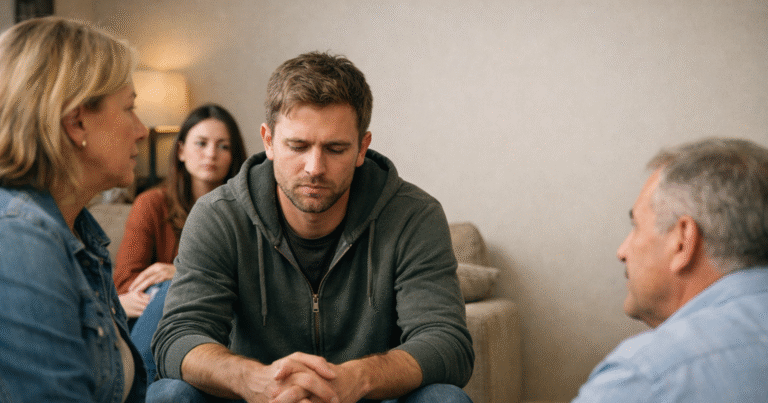

Recent studies are reinforcing a truth we already sense in our communities: early, compassionate, and structured help can shift trajectories sometimes before the crisis becomes unmanageable.
One study from Texas A&M University School of Public Health (July 2025) found that close social support significantly increases the intention among college students to seek help for excessive drinking. The researchers surveyed 1,447 students who had consumed alcohol in the past year. They found that while beliefs and personal attitudes explained nearly 40% of the variation in whether a student intended to seek help, the addition of social network factors how supportive their friends and family were added a statistically meaningful 2.8% more explanatory power.
Another recent finding: UTHealth Houston research showed that alcohol use is the strongest predictor of escalated cannabis vaping among Texas youth even when accounting for demographic variables. These studies both point to a bigger picture: substance behaviors are interconnected, and social/family dynamics are deeply influential. They also suggest that interventions need to be holistic, timely, and embedded in a person’s relational world not just focused on the individual in isolation.
About Crosswell Interventions
Crosswell Interventions is an Austin-based practice led by Will Crosswell, LCSW, LCDC, EMDR, with over a decade of clinical experience. Our mission is to walk alongside families and individuals confronting addiction not only to facilitate treatment entry, but to support healing through trauma, reconnect relationally, and strengthen the foundations for lasting recovery.
We use what we call the Crosswell Method™, a structured five-step process: listening, invitation, planning, treatment transition, and ongoing family support. Importantly, we’re clinician-led (not just peer coaching), trauma-informed, and rooted in empathy. We believe recovery doesn’t really begin at rehab it begins when a family, a loved one, or the person struggling acknowledges the need, hears gentle invitation, and gets real support to take the next step.
What Sets Us Apart
Here are some of the concrete ways Crosswell Interventions makes a difference grounded in measurable outcomes and in ways that address gaps revealed by recent research.
| Distinguishing Feature | Why It Matters / Evidence of Impact |
|---|---|
| Early intervention & invitation | Rather than only responding once addiction has deeply taken hold, we try to engage before rock bottom. This matches the findings from Texas A&M: support networks and earlier help seeking reduce harm. We see about 34% of those we serve accept the invitation to treatment. |
| Family & relational focus | Addiction affects more than the individual. Families are involved in our planning, coaching, and aftercare. This helps strengthen social support, which we know increases help-seeking intention. |
| Clinician-led and trauma-informed care | Will Crosswell combines credentials (LCSW, LCDC, EMDR) with lived and clinical experience. That helps us attend to trauma, co-occurring mental health challenges, and to build stronger therapeutic trust. |
| Continuity beyond treatment placement | We don’t consider the job done once someone is in a rehab or treatment facility. We help with transportation logistics, coordinate clinical case management for ~90 days after treatment begins, and offer ongoing coaching. That bridge matters. Recovery research shows outcomes are better when people have post-treatment support. |
| 24/7 availability & customized plans | Crises don’t wait for business hours. Having around-the-clock readiness means we can act when moments are decisive. Plans are customized—because what works for one person/family often fails for another. |
Team and Leadership
-
Will Crosswell, LCSW, LCDC, EMDR is the founder and a practicing interventionist. According to his Psychology Today profile, he’s been in practice about 11 years, with expertise in addiction, trauma, mood disorders, interventions.
-
The broader Crosswell Interventions team includes licensed therapists and interventionists, family clinical support providers, recovery coaches, and case managers. We emphasize continuous learning, sensitivity (especially to trauma), and relational humility.
Where This Aligns With Recent Findings and Why It Gives Hope
If we return to the research:
-
Texas A&M’s study shows that social support or lack thereof plays a crucial role in whether someone decides to get help. Crosswell’s relational focus (family involvement, ongoing support) directly responds to that gap.
-
The UTHealth Houston work reminds us that substance behaviors (alcohol, cannabis, vaping) interact. Isolating one type of intervention (e.g. only cannabis) may miss the bigger web. At Crosswell, our interventions address substance use broadly (including alcohol) and often mental health as comorbidity.
This makes our work especially relevant in the context of Alcohol interventions in Texas, where awareness, early outreach, and social/family support are often underutilized despite their clear impact.
More so, when we consider that many people with alcohol use problems don’t seek help, or delay help seeking, because they don’t think their support system will help them or because shame or stigma isolates them having compassionate, expert-guided interventions that invite involvement is powerful.
We see a lowering of certain overdose deaths in our community (Travis County, for instance) in recent years accidental drug deaths have dropped ~19%, fentanyl-related fatalities ~26% in one recent report. While that cannot be credited to any one organization alone, these trends affirm that coordinated, early, and relational work does move the needle.
Call to Action & Hopeful Forward
If you’re reading this because you or someone you care about is facing addiction alcohol, drugs, or otherwise know this: you don’t have to wait. Waiting often increases risk, isolates people further, and lets trauma continue shaping life unchallenged.
Crosswell Interventions is here to help build that bridge before things break beyond repair. If you can reach out to someone family, friend, a professional and ask for help, that moment might become the turning point. If you’re part of a community looking to support, fund, or partner with early intervention and family-centred addiction care, there’s space for your effort to matter deeply.